
Will it fit? Measuring for a sectional
By The LQ Furniture floor team ·
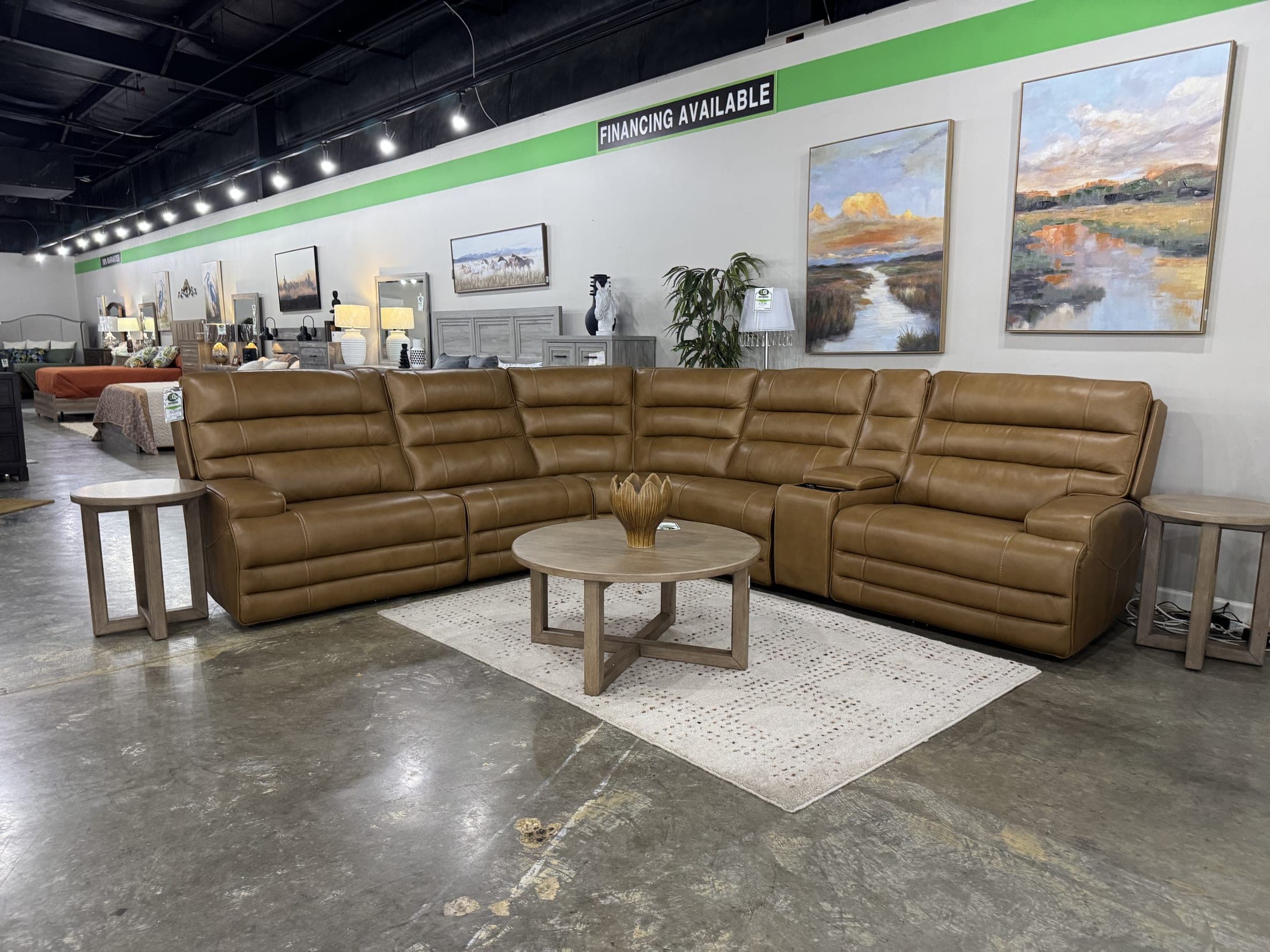
Four measurements decide whether a sectional fits: the wall it sits against, the walkway you leave in front of it, the narrowest doorway it has to pass, and the tightest turn on the way to the room. At LQ Furniture in Tupelo the doorway and the turn are what actually send sectionals back, not the wall most people measure first. Measure all four before you shop.
Start with the room, not the sofa
Measure the wall the long side will sit against, then subtract anything that eats into it: a fireplace hearth, a floor vent you cannot block, the swing of a door. What you have left is your working length, and a sectional should not fill all of it. Leave a hand's width at each end so the room does not read as stuffed.
Then measure the depth. A sectional with a chaise usually runs 60 to 68 inches deep on the chaise side, which is a lot more floor than people picture. Standing in the room imagining it is unreliable. Put it on the floor instead.
Tape it out
Painter's tape costs about three dollars and settles the argument in ten minutes. Mark the full footprint on your floor, including the chaise, then live with it for a day. Walk the path you actually walk. Open the closet. Pull out a dining chair. If you find yourself stepping around the tape, the piece is too big, and you learned that for three dollars instead of after delivery.
Leave room to walk
- Main walkways: 30 to 36 inches of clear floor
- Between the sofa and the coffee table: 14 to 18 inches
- In front of a TV: roughly 1.5 to 2.5 times the screen's diagonal
- Around a recliner: check the footrest extended, not closed
That last one catches people. A power recliner needs its full extended depth plus clearance behind if it is a rocker style. Measure it in the position you will actually sit in.
The doorway is the real bottleneck
Here is the measurement almost everybody skips. Measure the door opening frame to frame for width, and floor to the lowest point of the frame for height. If the door is hinged and cannot be removed, measure from the hinge to the opposite edge instead, because an open door steals one to two inches of usable width.
A sectional gets through a door in one of two ways: on its side, or in pieces. The number that matters is the smaller of the sofa's height and its depth, because that is the dimension you can turn into the opening. If your narrowest door is 30 inches and the piece measures 34 inches through its slimmest axis, it is not going in, no matter how many people are lifting.
Then walk the whole path. Front door, hallway, the corner at the top of the stairs, the turn into the room. A tight corner paired with a low ceiling is the most common failure, and it is invisible until the piece is stuck in it.
Modular pieces solve most of this
A modular sectional arrives as separate seats that connect once they are in the room. This matters even more in a manufactured home, where interior doors run narrower still. Each piece has to clear the door on its own, which is a far easier problem than moving one welded L through a hallway. If your doorways are narrow, or the room is upstairs, or the turn at the end of the hall is tight, start with modular and save yourself the wrestling match.
Which way does the chaise go?
Sectionals are sold as left-hand facing or right-hand facing, and the convention trips up plenty of people. Sit down on the sofa first, then look: the direction is named for the side the chaise is on as you sit, not as you look at it from across the room. Getting this backwards is one of the most common furniture ordering mistakes there is. On our floor you can walk around the actual piece and see it, which removes the guesswork entirely.
Bring the numbers with you
Write these down before you come in: wall length, room depth, narrowest doorway width and height, and the tightest turn on the path. Put them in your phone. Every piece on our floor is tagged and out in the open, so with your numbers in hand you can measure the actual sofa and know in a minute whether it works.
The floor changes every week and we usually cannot reorder, so the answer to will it fit is worth having before you find the piece, not after. Give yourself an hour, bring a tape measure if you like, and come walk it. No appointment needed. To hear when a new load lands, join the text list.