
Furnishing a double-wide: what actually fits
By The LQ Furniture floor team ·
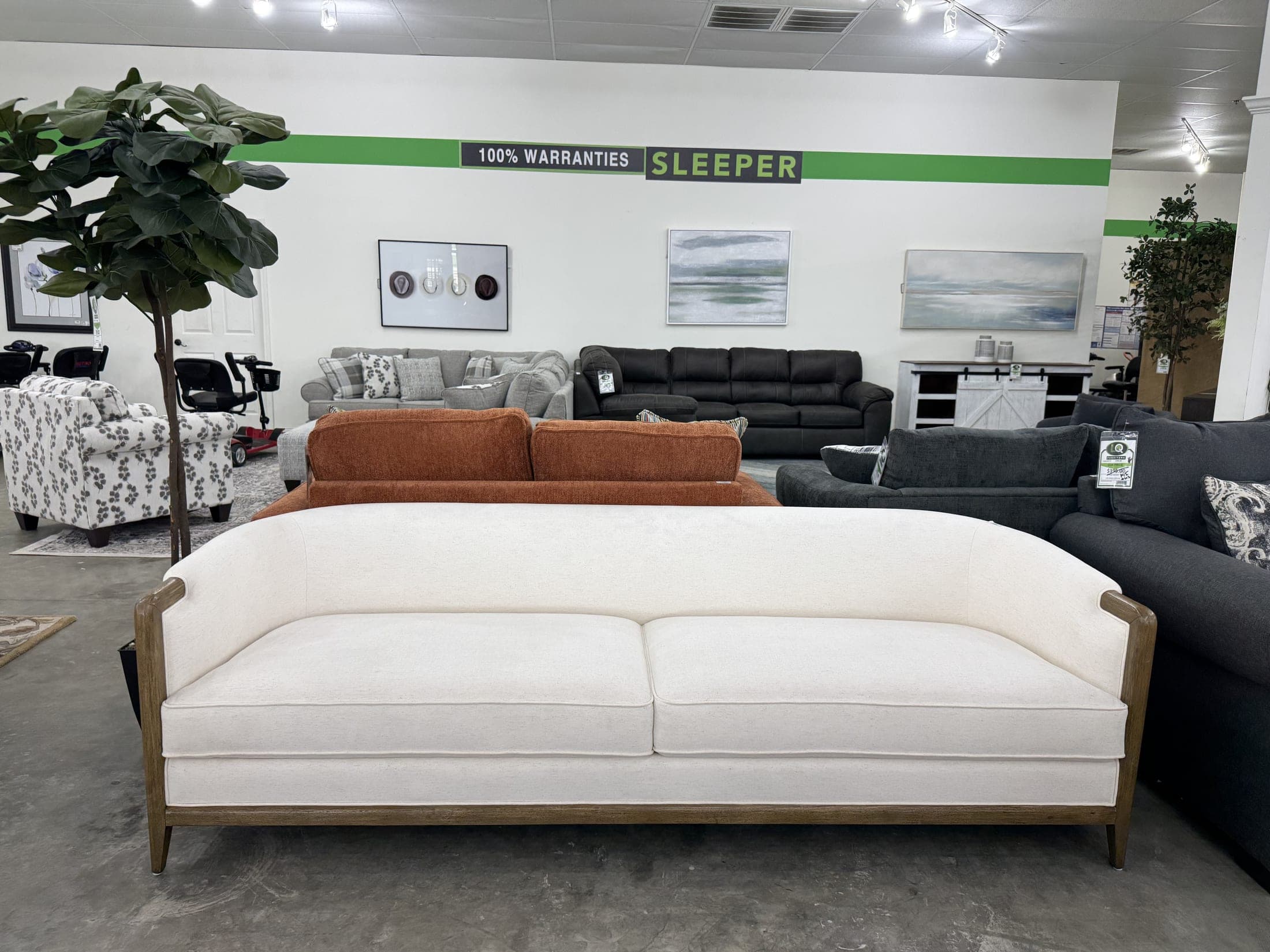
Furniture that fits a site-built house does not automatically fit a manufactured home. The three differences that matter are narrower interior doors, tighter hallway turns, and floors that flex more than a slab. Measure the doorway before anything else, favor pieces that come apart, and you will avoid nearly every problem people run into.
This is not a niche concern in Mississippi. Census Bureau survey data puts roughly one in seven Mississippi households in a manufactured home, among the highest shares of any state, and manufactured homes account for a large share of new single-family housing here. Around Tupelo and across North Mississippi, this is simply how a great many people live, and almost nobody writes furniture advice for it.
Measure the interior doors, not the front door
The front door on a manufactured home is usually the easy one. The interior doors are where furniture gets stuck. Bedroom and bathroom doors are often 28 to 30 inches wide, against 32 to 36 inches in most site-built homes, and hallways can run narrower with a tighter turn at the end.
Measure frame to frame for width, and floor to the lowest point of the frame for height. If a door is hinged and will not come off, measure hinge to opposite edge, because the open door itself steals an inch or two. Then walk the actual path from the outside door to the room and find the tightest point. That number is your real limit, and every piece has to clear it through its slimmest dimension.
Favor pieces that come apart
This is the single most useful habit for a manufactured home.
- Modular sectionals: each seat clears the door on its own, then connects in the room
- Beds with knock-down frames rather than one welded piece
- Dressers and chests over tall armoires, which fight low ceilings and tight turns
- Dining tables with removable legs
- Recliners where the back detaches, which is common on power models
A one-piece sofa that measures 36 inches deep is not going through a 30-inch door on any angle. The same seating as three connecting modules goes through without a fight. When in doubt, ask us which pieces on the floor break down. We move this furniture every day and we know which ones do.
Watch the ceilings and the scale
Standard manufactured home ceilings often run around 7 to 8 feet, lower than the 9-foot ceilings common in newer site-built homes. Tall headboards, big armoires and oversized floor lamps that look right in a showroom can crowd a room with a lower ceiling.
Scale matters more than square footage here. A living room that is a few feet narrower will take an apartment-scale sofa, a loveseat and recliner, or a compact modular sectional far better than one enormous L. Rooms in manufactured homes are also frequently long and narrow, which suits a sofa and two chairs better than a piece that eats a corner.
Think about weight and floor support
Manufactured home floors are built to a federal standard and are entirely sound, but they are typically framed lighter than a slab or a full basement floor. Concentrated weight is what to think about, not total weight.
The pieces worth pausing on are the heavy, small-footprint ones: a full curio cabinet, a large aquarium, a gun safe, a solid-wood hutch loaded with dishes. Where you can, place heavy items along an exterior wall or over a floor joist rather than in the middle of a span, and spread the load across a rug or a wider base. A sectional or a bedroom set spreads its weight over a lot of floor and is not something to worry about.
A practical order to buy in
Start with the pieces that are hardest to replace and hardest to fit, then fill in. In a manufactured home that usually means the bed and the sofa first, since those are the two that have to clear the narrowest doors. Storage next, because these homes tend to have less closet space than square footage suggests. Lamps and accents last, once you can see what the room needs.
Come with your numbers
Bring the narrowest interior door width, the ceiling height, and the length of the wall the sofa will sit against. That is enough to answer most questions in about a minute on our floor, where everything is out in the open and priced on the tag.
The floor turns over every week and we usually cannot reorder, so if a piece fits your doors and your room, that is worth acting on. If it will not fit your vehicle, we have partnered with a third-party vendor for delivery. Ask at the counter and we will get you set up, or read what actually fits in a truck or SUV before you drive over.